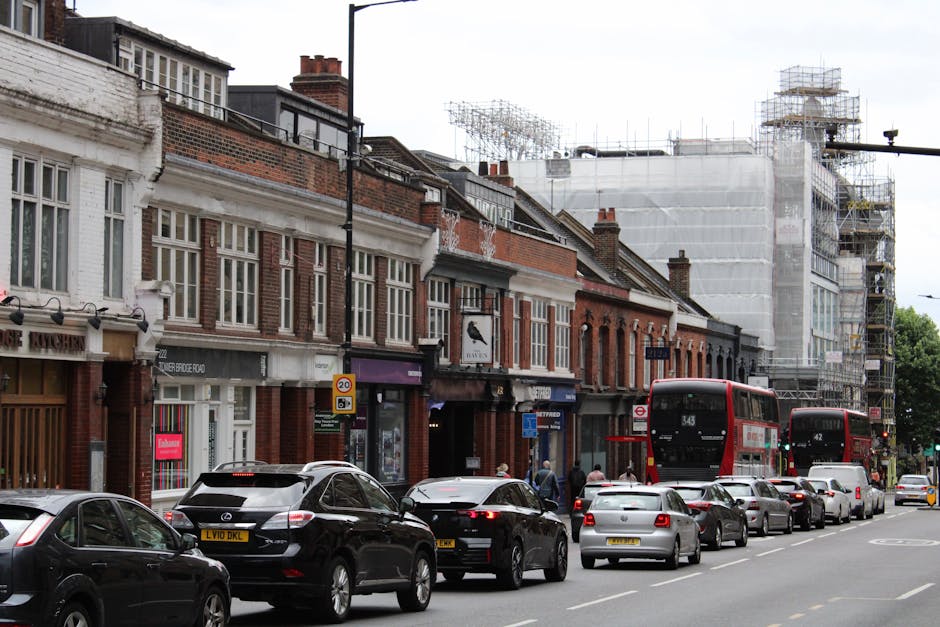
Catford Broadway removals: market-day access and timing
If you are planning a move around Catford Broadway, timing matters just as much as packing. On market days, the streets feel busier, loading space can shrink quickly, and a simple driveway-to-van move can turn into a slow shuffle if you arrive at the wrong moment. The good news is that with the right plan, Catford Broadway removals can be handled smoothly, even when market activity, pedestrian flow, and local parking pressure all come into play.
This guide explains how market-day access affects removals in Catford Broadway, what to expect on the ground, and how to plan your moving window so your day stays on track. You will also find practical steps, a comparison table, a checklist, and answers to the questions people usually ask before booking. If you want local support for the wider area, you may also find it useful to look at our London removals service, full removals options, and flexible man and van support when a smaller, more agile approach makes sense.
Expert summary: In busy local high-street settings, the real win is not just moving quickly. It is moving at the right time, with the right vehicle access, and with enough buffer for traffic, pedestrians, and loading restrictions.
Table of Contents
- Why Catford Broadway removals: market-day access and timing Matters
- How Catford Broadway removals: market-day access and timing Works
- Key Benefits and Practical Advantages
- Who This Is For and When It Makes Sense
- Step-by-Step Guidance
- Expert Tips for Better Results
- Common Mistakes to Avoid
- Tools, Resources and Recommendations
- Law, Compliance, Standards, or Best Practice
- Options, Methods, or Comparison Table
- Case Study or Real-World Example
- Practical Checklist
- Conclusion
- Frequently Asked Questions
Why Catford Broadway removals: market-day access and timing Matters
Catford Broadway is not the kind of place where you can assume a wide, empty road and a generous loading bay will be waiting for you. Market days change the rhythm of the street. Foot traffic rises, stopping patterns become less predictable, and vehicles may need to approach more carefully. For removals, that affects everything from when the van can pull in to how long it takes to carry furniture from door to vehicle.
If you are moving home, clearing a flat, or delivering bulky items, those small delays can snowball. A sofa that should have taken ten minutes to load can take twenty-five if the vehicle has to park further away. A team that expected easy access may need extra hands for longer carries. And if your move is tied to a completion time, a school run, or key handover, the difference between a smooth slot and a congested one matters a lot.
There is also a confidence factor. When you know the likely traffic pattern and market setup, you can choose a realistic time window rather than hoping for the best. That makes the whole day calmer. Truth be told, moving day already has enough surprises without adding avoidable street congestion to the mix.
For local moves near busy roads, a sensible plan also helps protect property. Less waiting at the kerb means fewer handling risks, less strain on the team, and fewer chances of damage during repeated lifts. That is one reason experienced movers think about access first and distance second.
How Catford Broadway removals: market-day access and timing Works
In practical terms, a market-day move around Catford Broadway is about matching your arrival time, van size, and loading plan to the street conditions you are likely to face. The aim is simple: reduce the amount of time your belongings spend outside and reduce the number of times items need to be lifted or carried farther than necessary.
What usually changes on market days
Market activity can affect several moving-day details at once:
- Kerbside space: You may have less room to stop close to the property.
- Pedestrian flow: Crowds can make it harder to move large items safely.
- Turnaround time: Vans may need to wait for a gap before reversing or parking.
- Access routes: Side streets and approach roads can become busier than expected.
- Loading efficiency: The same job often takes longer because each movement has to be more carefully managed.
That does not mean market-day removals are a problem by default. It means timing and planning matter more. A move set for early morning may be much easier than one scheduled for the late morning rush, depending on the exact location and how the street is operating that day.
How movers normally plan around it
A local crew will usually look at the property access, the likely van position, whether a parking suspension or loading arrangement is needed, and how long the walk from door to vehicle will be. If the job involves a narrow road or a busy front step, they may recommend starting earlier than you first expected. Sometimes a smaller vehicle or shuttle-style approach works better than a single larger lorry. On compact streets, being nimble is often smarter than being ambitious.
It also helps to think about the two moving phases separately: getting access and loading efficiently. People often focus on the packing side, but local access can be the real bottleneck.
A simple timing principle
If your move is near market activity, aim to build in buffer time before the busiest period begins. Even thirty minutes can make a meaningful difference. For some moves, an early slot is worth more than extra manpower. For others, a later slot after the peak has passed is easier. The best answer depends on the actual street layout, the floor level, and how much furniture you are shifting.
If you need help matching a move to the right vehicle and time window, a smaller, adaptable service can sometimes be more practical than a full-size lorry. That is one reason many people compare house removals support with office removals planning before choosing a final approach.
Key Benefits and Practical Advantages
Planning removals around Catford Broadway market-day conditions gives you more than convenience. It gives you control. And on moving day, control is worth its weight in tape, labels, and bubble wrap.
1. Fewer delays at the kerb
When you know when the street is likely to be busiest, you can reduce waiting time for a safe stopping point. That can keep the crew moving and help you avoid paying for avoidable downtime.
2. Safer handling of bulky items
Shorter, cleaner routes matter. A straight path from front door to van is much easier than trying to weave around pedestrians or parked vehicles. That lowers the chance of bumps, slips, and awkward turns with heavy items.
3. Better use of labour time
If the crew is not standing around waiting for access, they are loading, protecting, and transporting your belongings. That improves efficiency and makes the booking feel more focused.
4. Lower stress for you
Moves often go off the rails when time pressure meets uncertainty. Knowing the likely market-day pattern helps you make sensible decisions rather than reactive ones. You will notice the difference almost immediately once the day starts.
5. More accurate planning for vulnerable items
If you have antiques, electronics, mirrors, or awkward furniture, timing matters because these items often need slower handling. Better access means better care. Simple as that.
6. Improved coordination with other deadlines
Many moves involve more than one schedule: estate agent appointments, cleaning slots, key collection, lease deadlines, or business opening hours. A realistic access plan helps everything else stay aligned.
| Planning factor | Poor timing | Well-timed move |
|---|---|---|
| Kerb access | Vehicle waits or parks farther away | Cleaner approach with a workable stopping point |
| Loading speed | Interrupted by pedestrian flow | Steadier progress with fewer pauses |
| Stress level | Higher due to uncertainty | Lower because the plan is clear |
| Damage risk | More handling congestion | Less congestion, better control |
| Schedule confidence | Harder to predict finish time | More realistic timing and smoother handover |
Who This Is For and When It Makes Sense
This kind of planning is useful for anyone moving to, from, or through the Catford Broadway area, especially if the property sits close to the main road or on a side street that feeds into a busy stretch.
It is especially relevant if you are:
- moving from a flat above shops or a property with limited frontage
- dealing with a same-day key collection or completion deadline
- moving bulky furniture that needs close vehicle access
- running an office, studio, or small business relocation nearby
- using a man and van rather than a full-scale removal crew
- trying to avoid disruption during a market day or peak traffic period
It also makes sense if you have family logistics to juggle. For example, if children need to get to school, or if you need to keep one room clear while the rest of the home is being packed, the timing window becomes even more important.
Not every move needs a complex access strategy. A quiet weekday relocation from a ground-floor property with a private drive is simpler. But if you are anywhere near the Broadway on a busy day, it is wise to treat the access plan as part of the move itself, not an afterthought.
For some households, the best fit may be a local, multi-stop approach. For others, the job is cleaner when handled as one concentrated run. If you are comparing service styles, it can help to review broader support such as packing services and short-term storage options so the schedule is not forced by last-minute clutter.
Step-by-Step Guidance
Here is a practical way to approach a move around Catford Broadway when market-day access is part of the picture.
Step 1: Check the property and street layout
Start with the basics. Is there a safe place to stop? Are there yellow lines, loading limits, width constraints, or awkward corners? Does the front door open directly onto the pavement, or is there a communal path? These small details shape the whole day.
Step 2: Decide whether timing or vehicle size needs to change
Sometimes the solution is an earlier start. Sometimes it is a smaller vehicle that can position more easily. Sometimes it is both. The smartest option is the one that reduces friction, not the one that looks biggest on paper.
Step 3: Build in buffer time
Do not schedule your move as though the street will be empty and the weather perfectly cooperative. Assume some delay. A little slack in the booking often saves a lot of panic later.
Step 4: Pack for quicker carrying
Label boxes clearly, keep essentials separate, and avoid oversized boxes that are awkward to handle in a crowded area. If a box is heavy and hard to grip, it becomes a problem very quickly when someone has to navigate pedestrians or steps.
Step 5: Keep the exit route clear
Before the team arrives, make sure hallways, stairwells, and doorways are uncluttered. Move coats, shoes, bikes, bins, and loose objects out of the way. Clear pathways speed everything up and help avoid trip hazards.
Step 6: Confirm arrival instructions in advance
Share the property location, access notes, parking limitations, contact details, and any special requirements before moving day. The more precise the information, the less time gets lost on arrival.
Step 7: Plan for handover timing
If you are handing keys to a landlord, buyer, or agent, make sure the moving schedule leaves enough room. A move that finishes with five minutes to spare is not a good plan. It is a gamble.
Step 8: Keep essentials separate
Carry documents, chargers, medication, toiletries, and a kettle box separately if needed. In a busy local move, the last thing you want is to be digging through ten boxes to find a phone charger while the van is ready to go.
Expert Tips for Better Results
Good removals planning is often about a handful of small decisions made early. The following tips are the ones that make the biggest practical difference around busy local streets.
Choose the least congested window, not just the earliest one
Early is not always best. If the street is calmer slightly later, that may be more efficient than trying to beat the morning queue. The right slot depends on the actual pattern of the area, not a rule of thumb.
Consider access for both loading and unloading
People often focus only on the pick-up address. But if the destination has its own parking or access issues, the timing problem simply moves elsewhere. Plan both ends.
Use a smaller vehicle when access is tight
A smaller van can sometimes get closer to the property, which saves time and reduces carrying distance. On a busy street, that can be more useful than trying to maximise cargo volume in one go.
Prepare for one-way movement inside the property
When several people are moving furniture in a narrow corridor or stairwell, it helps to set a clear route and stick to it. That reduces collisions and unnecessary backtracking.
Ask about parking realism, not just availability
"Can we park nearby?" is a useful question. "Can we stop safely, load efficiently, and avoid being blocked?" is a better one. The difference is subtle, but it matters when the road is active.
Keep a simple move-day brief
One page is enough. Include address, contact names, timing, fragile items, parking notes, and any access code or gate detail. Nobody wants to search through messages while balancing a wardrobe.
For related planning support, it can also help to compare your move with end of tenancy removals if you are working to a landlord deadline, or with packing materials if you still need boxes, tape, and protective wrap.
Common Mistakes to Avoid
Most moving problems around busy streets are predictable. That is actually good news, because predictable problems can be prevented.
Booking a time slot without checking street conditions
A slot that works on a quiet residential road may be too tight on a market day. Check the actual setting rather than assuming a standard schedule will fit.
Underestimating walking distance from van to property
Ten extra metres may not sound like much. On moving day, with boxes, stairs, and repeated trips, it adds up fast.
Ignoring the impact of pedestrians
People shopping, walking, or pausing near stalls are part of the local environment. That is normal, but it must be built into the plan. Trying to power through only creates friction.
Not allowing for building access delays
Lift access, intercom issues, communal doors, and narrow staircases can all slow the process. The street is not the only bottleneck.
Packing fragile items too late
When the clock is ticking, fragile items often get rushed. That is exactly when they need the most care. Pack them earlier than you think.
Failing to warn neighbours or building managers
A short heads-up can prevent blocked entrances, unexpected objections, or confusion about where the van will stop. A little courtesy goes a long way.
Assuming the market setup will be the same every time
Market activity can vary. Do not rely on vague memory from a different week. If the move is important, verify the likely conditions again.
A small amount of planning avoids a lot of unnecessary drama. And to be fair, moving day is dramatic enough already without improvising around a crowded pavement.
Tools, Resources and Recommendations
The right tools do not replace planning, but they make a moving day easier and safer. Here is what is genuinely useful.
Useful moving tools
- Furniture blankets: protect finishes during short carries and loading.
- Straps and trolleys: help with heavy or awkward items on uneven routes.
- Labels and marker pens: save time when unpacking and reduce confusion.
- Portable floor protection: useful in shared entrances or where mud and foot traffic are likely.
- Box cutters and basic tool kits: essential for dismantling furniture if needed.
Useful planning resources
Local removal planning often works best when paired with the right support pages and service options. If your move involves a full property clearance or mixed item removal, it may help to review house clearance support or waste disposal options so unwanted items do not slow the job on the day.
If your move is more commercial, a focused office relocation plan can help you separate equipment handling from general furniture transport. For smaller, more flexible jobs, a man and van service can be a practical fit when access is tight and timing matters.
Simple recommendations that pay off
- measure large furniture before moving day
- keep a clear list of awkward items
- confirm access and parking assumptions twice
- place essentials in one clearly marked bag or box
- avoid last-minute sorting near the front door
Law, Compliance, Standards, or Best Practice
When removals involve public roads, parking, or loading near a busy shopping area, sensible compliance matters. Exact rules can vary by local authority and street, so it is wise to check any current restrictions before moving day rather than guessing. That is especially important if you expect to stop close to the property, use a suspended bay, or park in a way that could affect other road users.
As a general best practice, movers should aim to keep obstruction to a minimum, manage loading safely, and avoid creating unnecessary risk for pedestrians, cyclists, and other drivers. If the route involves public pavement or shared access, care and clear communication become even more important.
For residents and businesses, the practical takeaway is simple: do not assume that "it will probably be fine." If you need special access, check it early. If you need to notify a building manager or neighbour, do it early. If your move depends on an exact completion or handover time, build a margin into the schedule.
Where parking restrictions or loading allowances are involved, a mover should be cautious about making promises that depend on conditions outside their control. A reliable quote usually reflects the realities of the street, not an ideal version of it.
Options, Methods, or Comparison Table
Different moves call for different approaches. Around Catford Broadway, the best method usually depends on how much you are moving, how close the van can get, and how busy the street is at the time you need to operate.
| Method | Best for | Strengths | Trade-offs |
|---|---|---|---|
| Full removals team | Larger household moves | More hands, more structure, better for volume | Can be less flexible in tight access conditions |
| Man and van | Smaller moves or mixed loads | Agile, practical, easier to fit around access limits | May require more planning for bulky items |
| Shuttle approach | Roads with restricted kerb access | Useful when the vehicle cannot park directly outside | Can take longer due to transfer between vehicles |
| Split move by timing window | Busy market days or multi-phase jobs | Reduces pressure and fits around access constraints | Needs careful coordination |
In simple terms, a larger team is not automatically better, and a smaller van is not automatically cheaper in the end. The right decision is the one that fits the road, the timing, and the volume being moved. That is why a proper local assessment is worth the effort.
Case Study or Real-World Example
Imagine a two-bedroom flat near Catford Broadway with a front entrance close to the main pedestrian flow. The move is booked for a market day, and the household has standard furniture plus a few awkward items: a dining table, two bookcases, a mirror, and several boxed kitchen items.
At first glance, the move seems straightforward. But once access is checked, it becomes clear that van positioning will be limited and the walkway will be busier than usual from mid-morning onward. Rather than forcing the same plan, the move is adjusted.
The team arrives earlier, starts with the heaviest and most awkward items, and keeps fragile boxes separate. Parking instructions are confirmed in advance. The hallway is cleared the night before. The result is not glamorous, but it is effective: fewer delays, less carrying distance, and a more predictable finish time.
What made the difference was not luck. It was choosing the time window to match the street conditions, not the other way around. That is the real lesson for local removals around busy high-street areas.
If you are planning a similar move, it can help to book related support in advance rather than leaving it until the final week. For example, if you need boxes or protective materials, see packing materials early so you are not hunting for tape the night before.
Practical Checklist
Use this checklist to keep your move organised and realistic.
- confirm the exact moving address and floor level
- check likely market-day crowding and street access
- review parking restrictions and loading practicality
- choose a time window with buffer, not a tight squeeze
- measure bulky items before the move
- label fragile items clearly
- clear hallways, stairs, and doorways
- prepare keys, codes, and contact numbers
- separate essentials from packed boxes
- tell neighbours or building staff if access may be affected
- confirm whether a smaller van or shuttle approach is smarter
- keep a plan for any items going into storage or disposal
Quick reminder: the easiest moving day is usually the one that looks slightly over-planned from the outside. That is not a bad thing.
Conclusion
Catford Broadway removals are easiest when you treat market-day access and timing as core parts of the move, not background details. The street environment can change how close you can park, how fast you can load, and how much margin you need between arrival and completion. If you plan for those realities early, the whole job becomes more manageable.
The main lesson is straightforward: choose the time slot, vehicle, and handling plan that fit the street, the property, and the day. That approach protects your schedule, reduces stress, and gives your belongings a safer journey.
Whether you are moving a flat, clearing a house, or relocating a small business nearby, the best results usually come from clear access planning and honest timing. If you want a move that feels organised rather than rushed, that is the place to start.
Get a free quote today and see how much you can save.
Frequently Asked Questions
What is the biggest challenge with removals near Catford Broadway on market days?
The biggest challenge is usually access. Busy streets, reduced kerb space, and heavier pedestrian flow can slow loading and make parking more difficult than on a quiet day.
Should I book a morning or afternoon move for Catford Broadway?
That depends on the local traffic pattern and the exact market activity on the day. In many cases, the better slot is the one that avoids the busiest pedestrian period, even if that is not the earliest option.
Can a man and van service work better than a large removals lorry?
Yes, sometimes. If access is tight or the road is busy, a smaller and more flexible vehicle can be easier to position and may reduce carrying distance.
Do I need special parking arrangements for a move near the Broadway?
Possibly. It depends on the street, current restrictions, and where the vehicle can safely stop. Always check the local situation in advance rather than assuming kerbside space will be available.
How much extra time should I allow for market-day access?
There is no single fixed amount, but building in some buffer is wise. Even a modest delay can affect a tightly scheduled move, so avoid leaving no room at all.
What should I tell my removal company before the move?
Share the full address, floor level, access notes, parking limitations, any known restrictions, and whether bulky or fragile items need special handling. The more complete the information, the better the plan.
Is it better to move before the market starts or after it ends?
Often yes, but not always. The best choice depends on the street, the loading space, and the rest of your schedule. Sometimes an early start avoids congestion; other times waiting slightly longer is safer and more efficient.
What if my property is on a narrow road near Catford Broadway?
Then access planning becomes even more important. A smaller vehicle, a shorter loading route, or a staged move may work better than trying to force a one-size-fits-all solution.
Can market-day removals be done safely?
Yes, provided the plan is realistic. Safe handling, clear routes, careful parking, and enough time are the key ingredients. Busy streets require more discipline, not necessarily more complication.
How do I know whether I need storage as part of the move?
If your completion is delayed, your new place is not fully ready, or you need to reduce the amount moved on the day, short-term storage can be very helpful. It is often a practical pressure valve rather than a last resort.
What items cause the most problems in busy-access moves?
Large sofas, wardrobes, mirrors, glass tables, and heavy bookcases usually create the most difficulty because they are awkward to carry and require more space to manoeuvre.
What is the simplest way to avoid delays on the day?
Confirm access early, choose a realistic time window, keep pathways clear, and pack so the first items out are the easiest to load. Good preparation saves more time than almost any last-minute tactic.